

Home Design with the Hydroponic Tower
Beyond Salad: The Hydroponic Tower as a Style Statement
(This is the shortened version of the full article “Vertical Scenography: Home Hydroponic Towers as Living Sculptures,” which you can find here.)
When we think of a home hydroponic tower, the first things that come to mind are usually practical — fresh greens at your fingertips, sustainability, waste reduction. But what if we told you that the real trend catching the attention of architects and interior designers today lies elsewhere?
Having a vertical garden at home is no longer just an ethical or culinary choice. It has become a design statement.
In an era when our homes are both our refuge and, increasingly, our workplace, the aesthetics of the objects we live with matter. The hydroponic tower has evolved from a simple “farming tool” into a genuine piece of interior design.
So, what makes it so appealing to design professionals? We analyzed the trends and opinions emerging from architecture studios and leading design publications.
1. The Principle of Biophilic Design
This is perhaps the most frequently mentioned concept. “Biophilic Design” isn’t a passing fad — it’s an architectural approach rooted in the innate human need to connect with nature.
Architects and designers have moved beyond the idea of “a potted plant in the corner.” As noted in publications such as Dezeen and Architectural Digest, the goal now is to integrate living systems into the architecture itself.
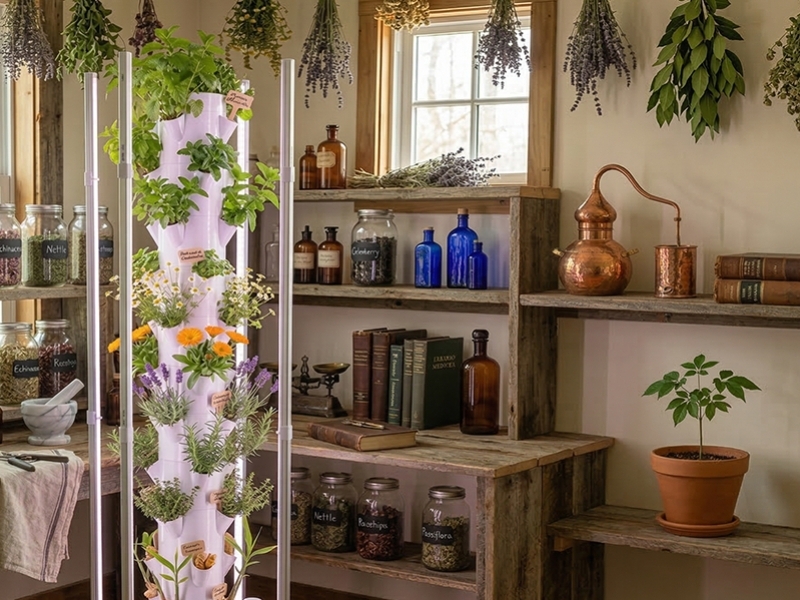
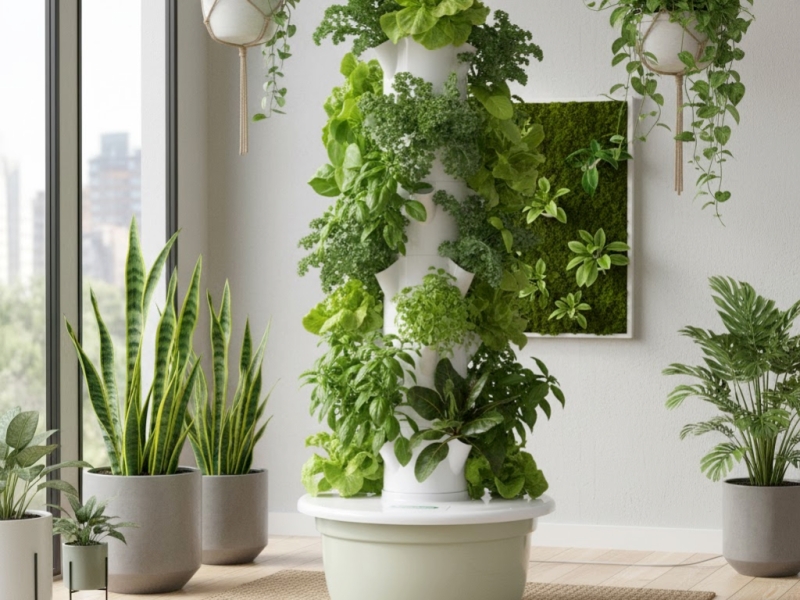
A hydroponic tower isn’t a static object; it’s a living ecosystem that breathes and grows. It’s not a decorative item — it’s living design. Placing one in a living room or kitchen declares that nature is not a guest, but a resident part of the home.
2. The Vertical Sculpture That Optimizes Space
In modern urban apartments, space is a luxury. Designers are constantly seeking ways to “furnish vertically.”
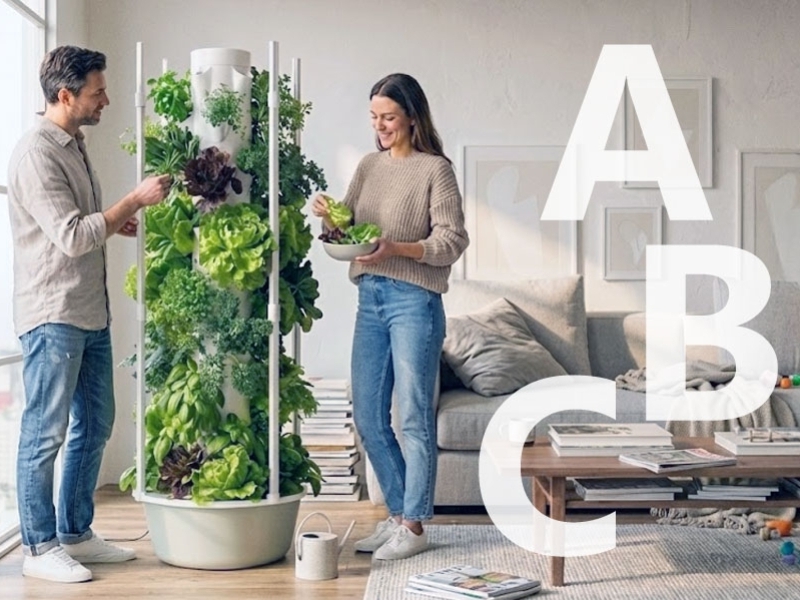
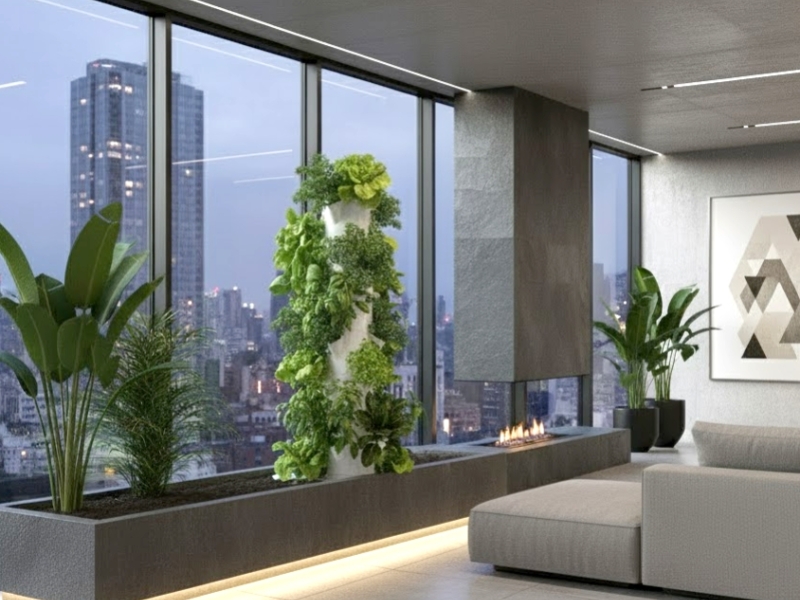
A hydroponic tower meets this need perfectly. Its upward development draws the eye upward, creating a sense of spaciousness and acting as a true focal point in the room.
Many interior designers compare it to a modern sculpture or an art installation. Unlike a painting or statue, it’s a work of art that changes every day, following the plants’ growth cycle. Its clean, minimalist lines — typical of newer models — fit beautifully with Scandinavian, modern, and even industrial interiors.
3. The Aesthetic of Light: A Piece of Lighting Design
One often overlooked aspect is lighting. The integrated grow lights essential for plant health serve a double aesthetic purpose.
First, they create evocative accent lighting. In the evening hours, the tower transforms into a kind of designer lamp, illuminating the foliage and creating a warm, welcoming atmosphere. As many lighting design experts note, this “living light” adds dynamism to a space that would otherwise rely on static light sources.
Second, the light itself becomes part of the “high-tech yet warm” aesthetic. It’s not the cold light of a laboratory, but a carefully designed glow that enhances both the plants and the surrounding environment.
4. Where Design Meets Function (and Vice Versa)
For designers, the best form is the one that follows function. A hydroponic tower perfectly embodies this principle — it isn’t fake, nor is it mere decoration.
Its beauty comes from its efficiency. Every curve, every opening, every component serves a clear purpose. This design honesty, where advanced technology serves a natural goal — growth — fascinates designers.
Publications like Domus and Design Milk often celebrate objects that merge technology and daily life in harmony. A hydroponic tower isn’t an appliance to hide — it’s a piece of advanced technology meant to be displayed, almost like a collector’s item.
Conclusion: More Than Furniture — A Way of Living
Experts agree: the home hydroponic tower has outgrown its initial definition. It’s a symbol of a new way of living — sustainable, technological, and aesthetically refined.
It’s an object that interacts with space, evolves with the seasons, and turns a blank wall into a dynamic, living statement of style.
Intrigued?
In this article we’ve only touched the surface — the visual and stylistic impact of a vertical garden.
You can find the full article, “Vertical Scenography: Home Hydroponic Towers as Living Sculptures,” from which this summary is drawn.
But the influence of a living ecosystem at home goes far beyond aesthetics, touching deeper aspects of our mental and physical well-being. To discover how active greenery can improve your mood and energy, read our next feature: “[Hidden Benefits: How a Hydroponic Tower Can Boost Your Mental Well-Being]”.
Share this content